Bigger movements
Rotating a tooth substantially, or moving roots rather than crowns, is what fixed appliances do best.
Clear braces
Clear braces work exactly as metal ones do, with brackets made from ceramic that blends with the tooth. They handle movements aligners struggle with, and they cannot be left in a napkin at lunch.
Rotating a tooth substantially, or moving roots rather than crowns, is what fixed appliances do best.
They are on the teeth all the time, which removes the main variable in aligner treatment.
Where the movement is significant, fixed braces frequently finish sooner than aligners would.
Ceramic brackets are more visible than aligners and less visible than metal. They can pick up stain at the edges over a long treatment, particularly with coffee, tea and smoking.
Cleaning takes more effort. Food gets caught, and the areas around the brackets are where decalcification marks appear if brushing slips. Your hygienist will want to see you more often while they are on, and that is worth agreeing to.
Questions
Ceramic is more brittle, so a bracket occasionally chips or debonds. It is a quick repair, but it is a reason we avoid them on the lower back teeth.
Typically every four to eight weeks.
Yes, the same as with aligners. Teeth move for life; retainers are what hold the result.
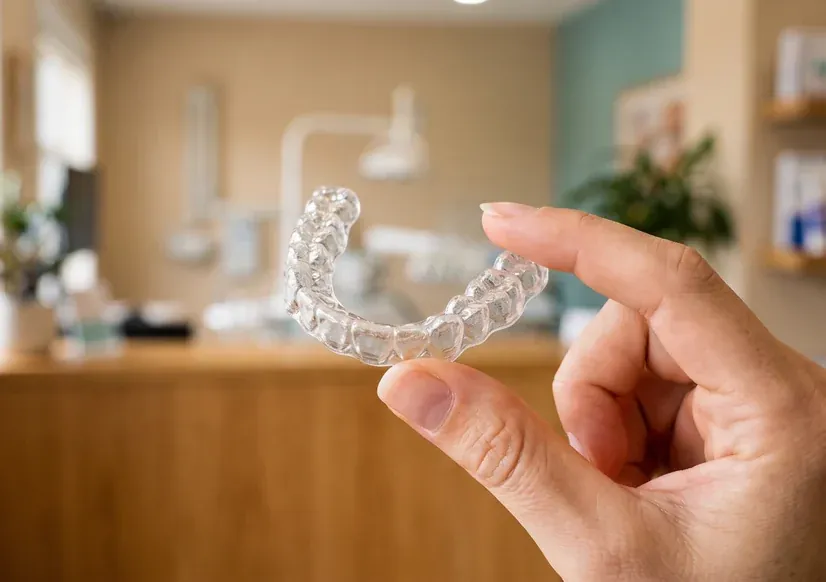
Clear aligners you can take out to eat.
Explore →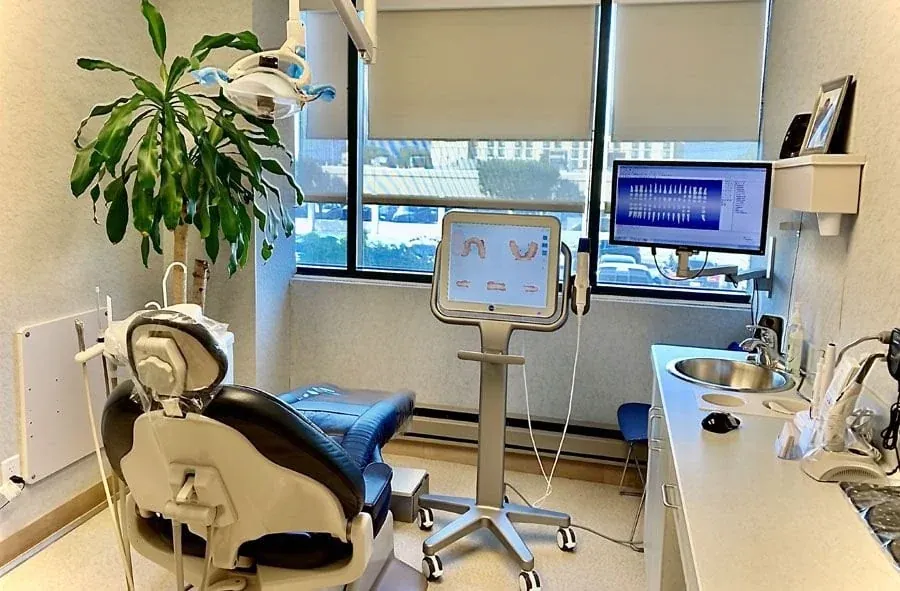
The appointment that prevents the other eight.
Explore →
In-office and take-home, supervised either way.
Explore →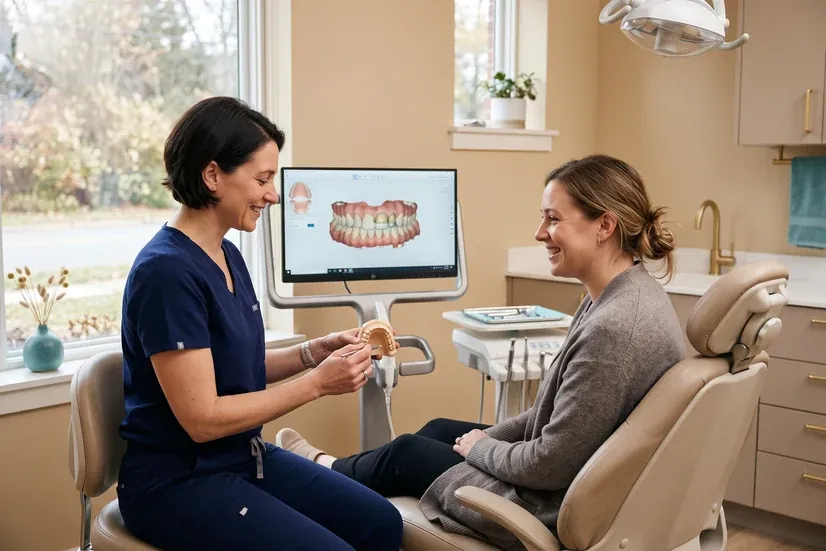
Jaw pain, clicking and grinding.
Explore →
First visits, sealants and good habits.
Explore →Where to start, and what it costs.
Explore →Next step
The first appointment is an examination and a conversation. There is no obligation to book treatment at the end of it.